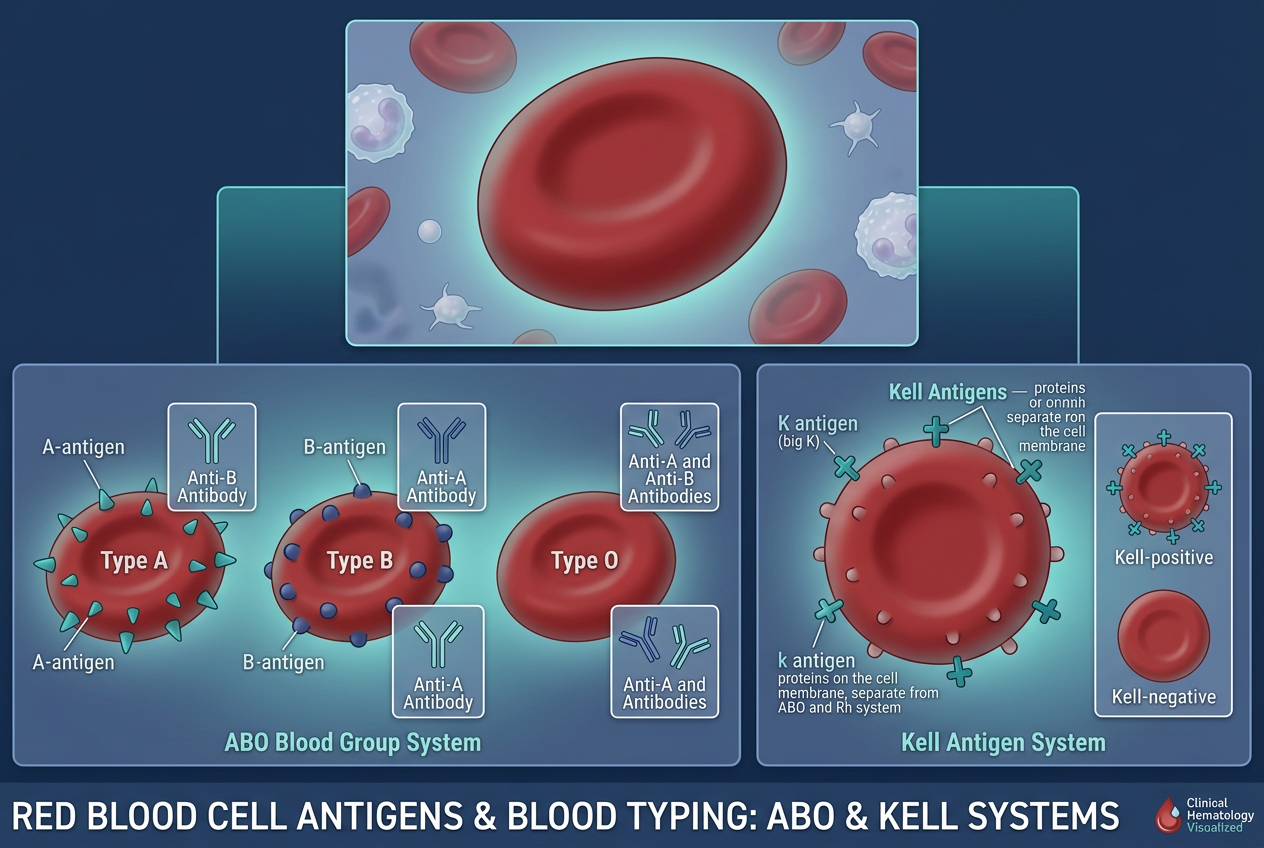
Kell antibodies are immune antibodies directed against antigens in the Kell blood group system — a set of proteins on the surface of red blood cells. After the ABO and Rh systems, Kell is among the most clinically significant blood group systems in transfusion medicine.
Key takeaways
The Kell system includes the strongly immunogenic K (KEL1) antigen and its partner k (KEL2). Kell antibodies are usually IgG, form after exposure to foreign red cells through transfusion or pregnancy, and can cause transfusion reactions and hemolytic disease of the fetus and newborn.
The Kell blood group system
The Kell system contains more than 30 antigens, but the most important pair is K (also called KEL1 or Kell) and k (KEL2, or Cellano). Most people are K-negative, so being exposed to K-positive red cells can prompt the immune system to make anti-K antibodies. The K antigen is highly immunogenic — second only to the D antigen of the Rh system in its ability to provoke an antibody response.
How Kell antibodies form
Kell antibodies are almost always "immune" antibodies, meaning they develop only after the immune system meets red cells carrying an antigen the person lacks. The two main routes of exposure are blood transfusion and pregnancy, when fetal red cells cross into the mother’s circulation. Once formed, these IgG antibodies can persist for years.
Why Kell antibodies are clinically important
- Transfusion reactions: Kell antibodies can destroy transfused red cells that carry the corresponding antigen, causing a hemolytic transfusion reaction.
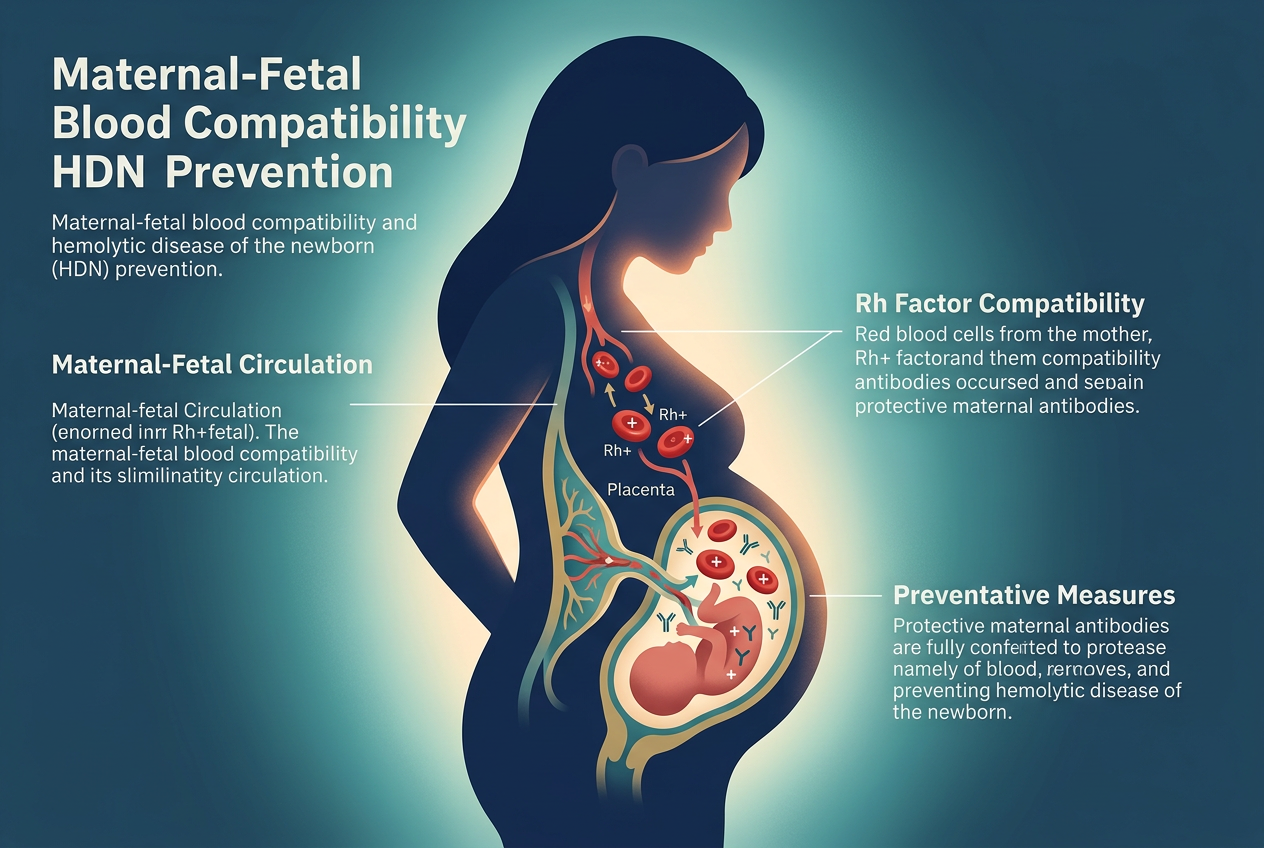
- Hemolytic disease of the fetus and newborn (HDFN): during pregnancy, maternal anti-K can cross the placenta and attack fetal red cells.
- Suppressed red cell production: uniquely, Kell antibodies can also suppress the development of red cell precursors in the fetus, which can cause severe anemia.
How Kell antibodies are detected
Kell antibodies are identified through an antibody screen and antibody identification panel, part of routine pre-transfusion testing and prenatal (antenatal) screening. When an antibody is found, the laboratory selects antigen-negative blood for transfusion and, in pregnancy, monitors the pregnancy more closely.
Related reading
This overview covers the Kell system as a whole. For deeper dives, see our companion articles on the anti-K alloantibody in transfusion and anti-Kell antibodies in pregnancy.
Frequently Asked Questions
References & Further Reading
Educational disclaimer: This article is for general educational purposes only and does not constitute medical advice, diagnosis, or treatment. Always consult a qualified healthcare professional about your test results and any medical concerns.