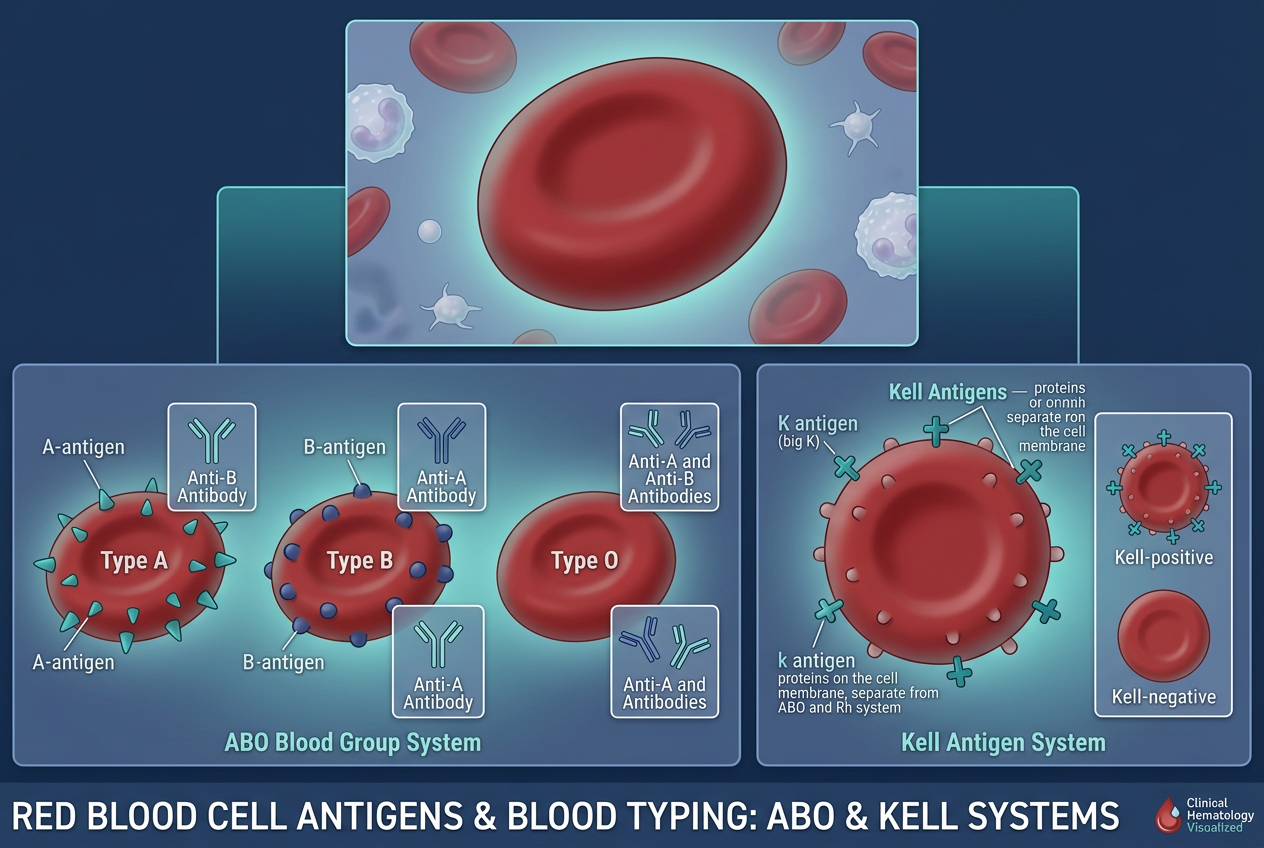
Anti-K — an antibody against the K (KEL1) antigen of the Kell blood group system — is one of the most frequently encountered clinically significant red cell alloantibodies outside the ABO and Rh systems. This article focuses on its role in blood transfusion. For a broader overview of the Kell system, see our Kell antibodies guide.
Key takeaways
Anti-K is usually an IgG antibody produced after exposure to K-positive red cells. It can cause hemolytic transfusion reactions, so once identified, patients must receive K-negative (antigen-negative) blood.
What is anti-K?
The K antigen is highly immunogenic, meaning it readily provokes an immune response. Because most people are K-negative, a single transfusion of K-positive blood can prompt some recipients to make anti-K. The antibody is predominantly IgG and reacts best at body temperature, which is why it is clinically important rather than merely a laboratory curiosity.
How anti-K is detected
Anti-K is typically found during a routine antibody screen performed before transfusion. If the screen is positive, an antibody identification panel pinpoints the specificity. The indirect antiglobulin test (indirect Coombs) is the core method used to demonstrate IgG antibodies binding to reagent red cells.
Selecting compatible blood
- Once anti-K is identified, the transfusion service issues only K-negative red cell units.
- Units are cross-matched to confirm compatibility before release.
- The patient is usually given a card or record noting the antibody, so future providers can plan ahead.
Why anti-K matters for patient safety
If a patient with anti-K receives K-positive blood, the antibody can bind and destroy the transfused cells, causing a hemolytic transfusion reaction that ranges from mild to serious. Careful antibody screening and antigen-negative selection prevent this. This is why pre-transfusion testing is a cornerstone of transfusion safety.
Antibodies persist in memory
Even if anti-K becomes undetectable over time, immune memory remains. A previously identified antibody means antigen-negative blood should always be provided in the future.
Frequently Asked Questions
References & Further Reading
Educational disclaimer: This article is for general educational purposes only and does not constitute medical advice, diagnosis, or treatment. Always consult a qualified healthcare professional about your test results and any medical concerns.