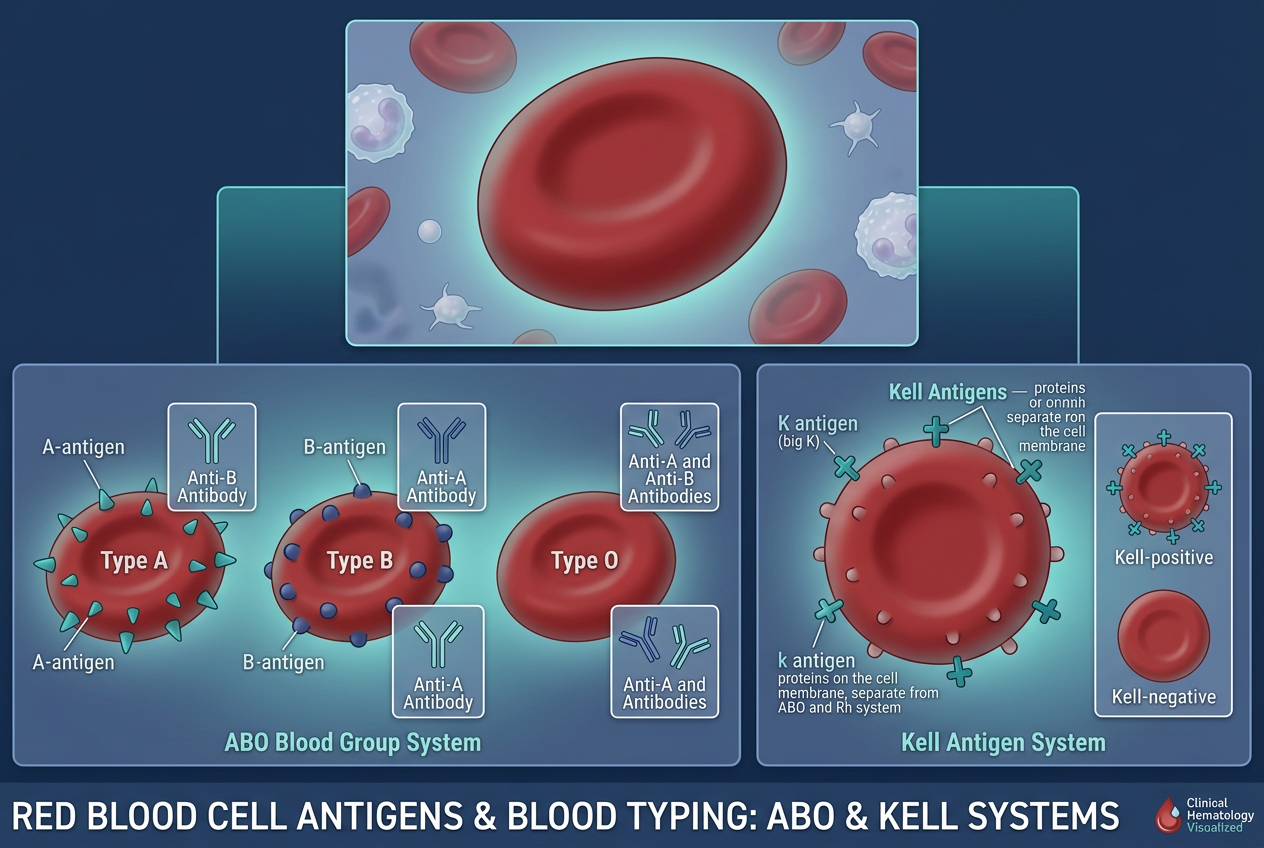
Anti-Kell antibodies are antibodies against the K antigen of the Kell blood group system. While they are important in transfusion, they are especially significant in pregnancy, where maternal anti-Kell can affect the developing baby. This article focuses on pregnancy; see our Kell system overview and anti-K in transfusion articles for related topics.
Key takeaways
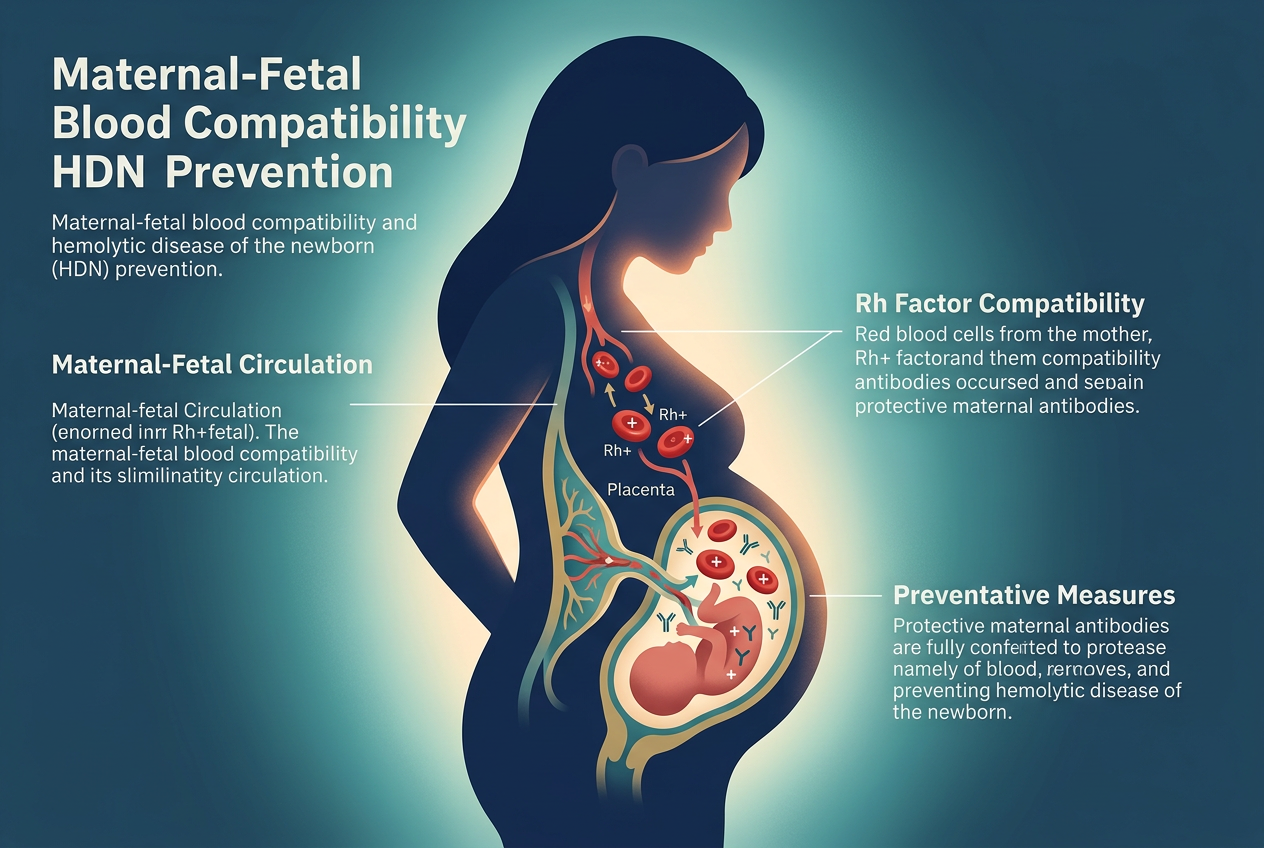
Anti-Kell in a pregnant person can cross the placenta and cause hemolytic disease of the fetus and newborn (HDFN). Uniquely, anti-Kell also suppresses fetal red cell production, so it can cause severe anemia even when other markers look reassuring — hence the clinical saying “Kell kills.”
How anti-Kell develops in pregnancy
A person can develop anti-Kell after a previous transfusion or after a previous pregnancy in which fetal red cells carrying the K antigen entered their circulation. If a K-negative mother carries a K-positive baby (inherited from a K-positive father), her immune system may produce anti-Kell that can affect current or future pregnancies.
Why anti-Kell is considered especially serious
Most causes of HDFN work by destroying red cells that have already formed. Anti-Kell does this too, but it also attacks early red cell precursors in the fetal bone marrow, suppressing the production of new red cells. Because of this dual effect, the usual laboratory sign of blood breakdown (bilirubin) may be lower than expected even when anemia is severe, which makes careful monitoring essential.
How anti-Kell is detected and monitored
- Antenatal antibody screening: routine prenatal blood tests screen for red cell antibodies, including anti-Kell.
- Paternal and fetal antigen status: if anti-Kell is found, testing may determine whether the baby is likely to be K-positive.
- Titers and specialist referral: rising or significant antibody titers prompt referral to maternal-fetal medicine.
- Middle cerebral artery Doppler: a non-invasive ultrasound measurement used to detect fetal anemia so it can be treated in time.
How affected pregnancies are managed
When monitoring suggests significant fetal anemia, specialists can perform an intrauterine transfusion to support the baby until delivery. After birth, the newborn may need phototherapy or transfusion. With modern surveillance and treatment in specialist centers, outcomes have improved dramatically compared with the past.
Reassurance and specialist care
Finding anti-Kell in pregnancy does not mean a baby will be harmed — many pregnancies proceed safely with monitoring. The key is early detection and care from a maternal-fetal medicine team.
Frequently Asked Questions
References & Further Reading
Educational disclaimer: This article is for general educational purposes only and does not constitute medical advice, diagnosis, or treatment. Always consult a qualified healthcare professional about your test results and any medical concerns.