Smith antibodies (anti-Sm) are autoantibodies directed against the Smith antigen, a group of proteins bound to small nuclear RNA inside cells. This article explains what the Smith antibody test measures and how it fits into autoimmune testing. For a focused look at its role in diagnosing lupus, see our anti-Smith antibodies article.
Key takeaways
The Smith antibody test is part of the extractable nuclear antigen (ENA) panel. It is a blood test that looks for a specific nuclear autoantibody most closely associated with lupus.
What the test measures
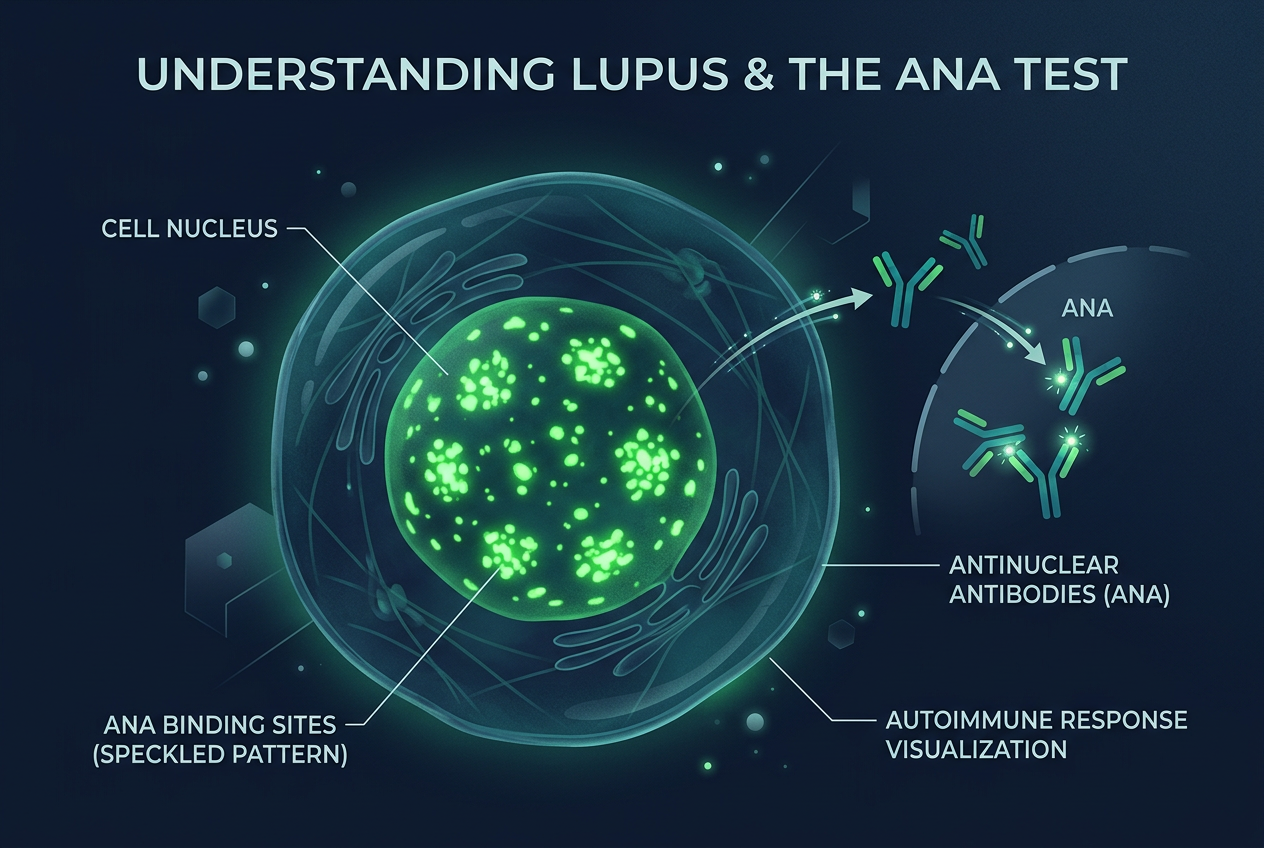
The Smith antibody test detects antibodies against the Sm proteins that form part of the spliceosome — the cellular machinery that edits RNA. Because these proteins live inside the nucleus, antibodies against them indicate that the immune system is reacting to the body’s own cellular components, a hallmark of autoimmunity.
How the test is performed
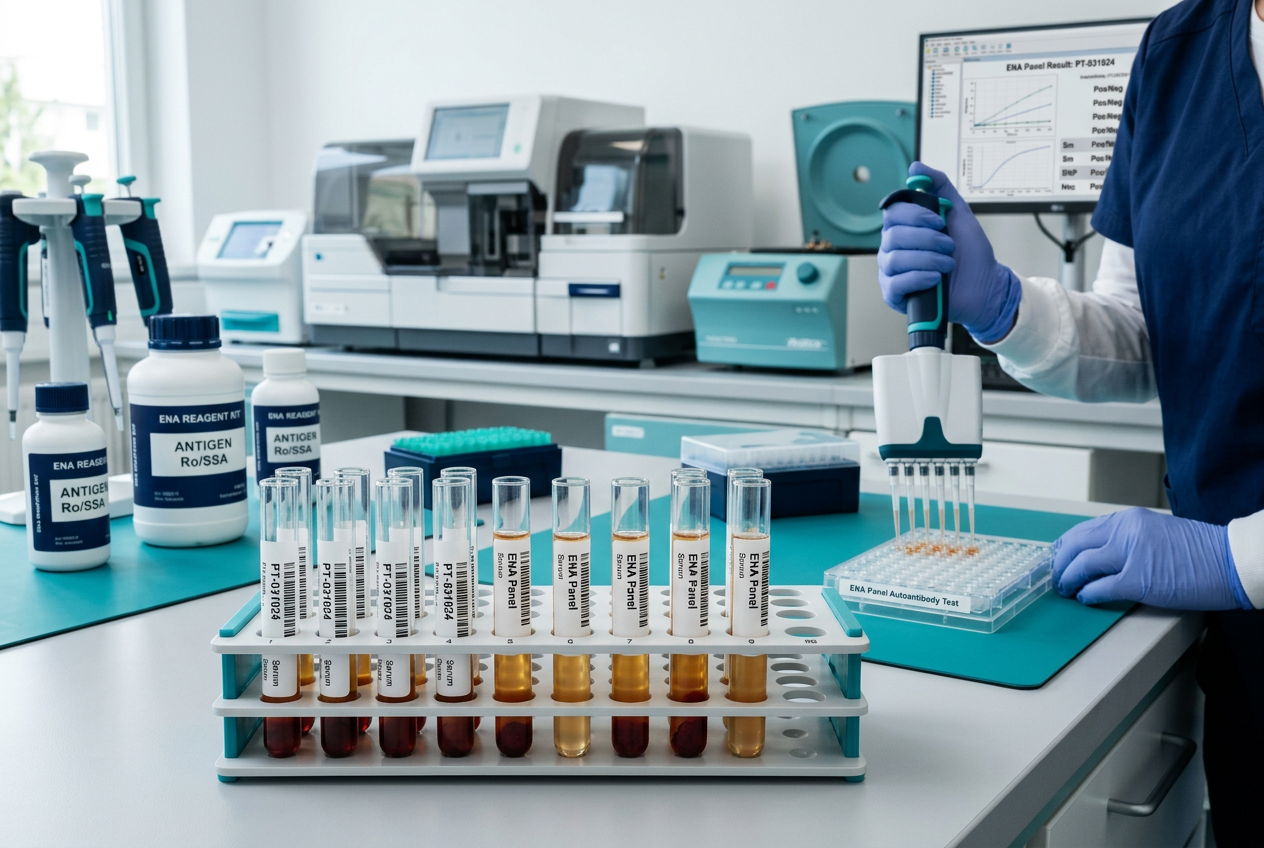
The test requires a standard blood draw. In the laboratory, the sample is analyzed using immunoassays such as ELISA or multiplex bead technology, typically as one component of an ENA panel that measures several nuclear antibodies at once. It is usually ordered after a positive antinuclear antibody (ANA) screen.
What else is on the ENA panel
- Anti-Sm (Smith) — the subject of this article
- Anti-RNP — associated with lupus and mixed connective tissue disease
- Anti-Ro/SSA and anti-La/SSB — associated with Sjögren’s syndrome and lupus
- Anti-Scl-70 and anti-Jo-1 — associated with scleroderma and myositis
How results are used
Because the Smith antibody is strongly linked to systemic lupus erythematosus, a positive result is an important clue when an autoimmune condition is suspected. Results are always interpreted by a clinician alongside symptoms and other antibody tests — never in isolation.
Educational information only
This article explains what the test measures. It does not interpret individual results; only your healthcare provider can do that in the context of your health.
Frequently Asked Questions
References & Further Reading
Educational disclaimer: This article is for general educational purposes only and does not constitute medical advice, diagnosis, or treatment. Always consult a qualified healthcare professional about your test results and any medical concerns.