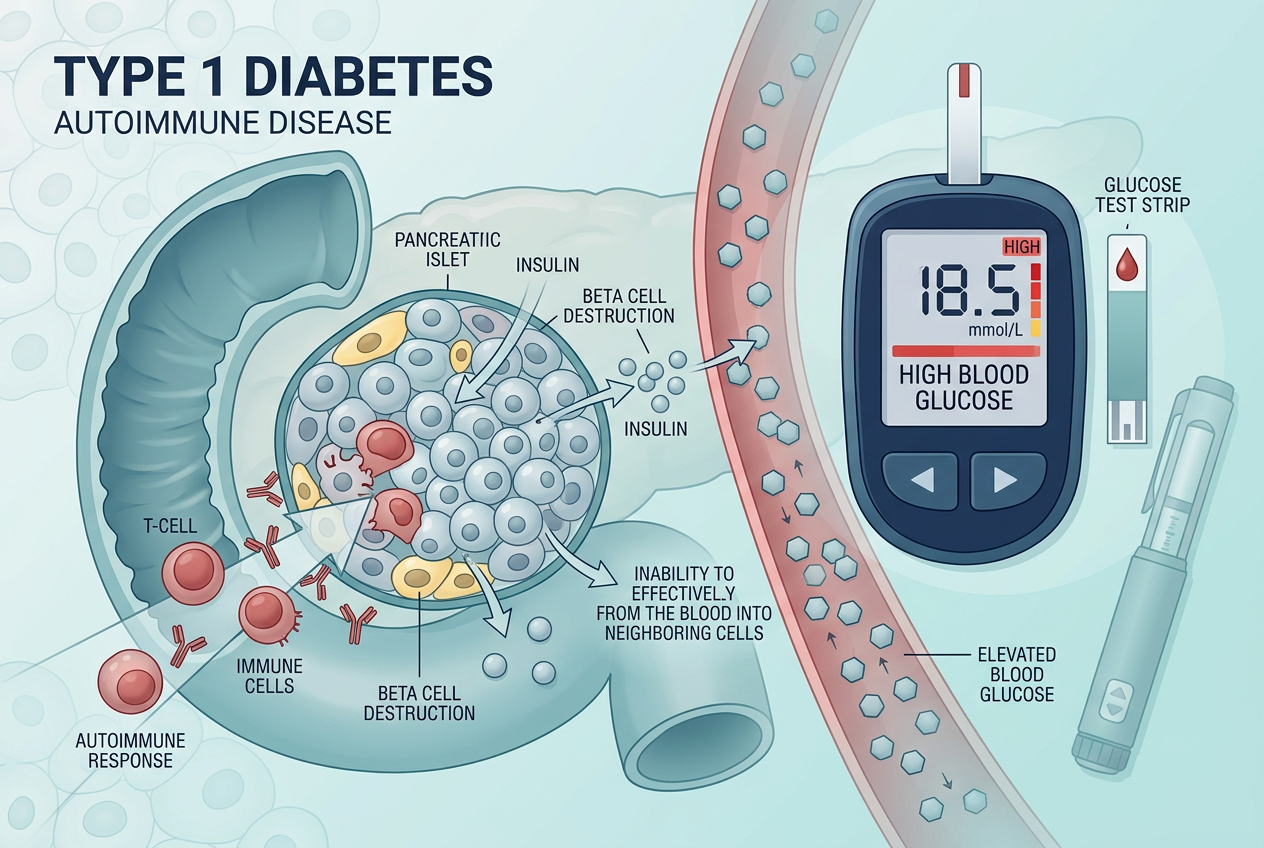
Glutamate decarboxylase antibodies — usually called GAD antibodies or anti-GAD65 — are autoantibodies against the enzyme glutamic acid decarboxylase. This enzyme helps produce GABA, an important signaling molecule, and is found in the insulin-producing beta cells of the pancreas and in nerve tissue. GAD antibodies are best known as a marker of autoimmune diabetes.
Key takeaways
GAD antibodies help identify autoimmune (type 1) diabetes and LADA, distinguishing them from type 2 diabetes. High levels are also associated with certain neurological conditions such as stiff person syndrome and some forms of cerebellar ataxia.
What GAD antibodies indicate in diabetes
In type 1 diabetes, the immune system attacks the pancreatic beta cells that make insulin. GAD antibodies are one of several islet autoantibodies that reflect this process. Their presence indicates an autoimmune cause of diabetes rather than the insulin-resistance mechanism of type 2 diabetes.
LADA: latent autoimmune diabetes in adults
Some adults who initially appear to have type 2 diabetes actually have a slowly progressing autoimmune form called LADA. GAD antibodies are the most commonly measured marker for LADA. Identifying it matters because these patients often progress to needing insulin sooner than typical type 2 patients.
GAD antibodies in neurological conditions
Because GAD is also present in the nervous system, high-titer GAD antibodies are linked to several neurological disorders, including stiff person syndrome, some cases of cerebellar ataxia, and certain forms of autoimmune epilepsy or encephalitis. The antibody levels seen in these conditions are typically far higher than those seen in diabetes.
How to interpret GAD antibody results
- Positive, in the context of diabetes: supports an autoimmune cause (type 1 diabetes or LADA).
- Very high titers, with neurological symptoms: may point toward a GAD-associated neurological syndrome and prompt specialist referral.
- Negative: reduces the likelihood of GAD-mediated autoimmunity but does not fully exclude type 1 diabetes, since other islet antibodies exist.
Levels and context matter
The meaning of a GAD antibody result depends heavily on the titer and the clinical setting. The same test is interpreted very differently in a diabetes clinic versus a neurology clinic.
Why the distinction is useful
Correctly classifying diabetes guides treatment: people with autoimmune diabetes generally need insulin and benefit from earlier, closer monitoring. In neurology, identifying a GAD-associated syndrome can open the door to specific immune-based therapies. In both settings, the antibody result is one piece of a larger clinical picture.
Frequently Asked Questions
References & Further Reading
Educational disclaimer: This article is for general educational purposes only and does not constitute medical advice, diagnosis, or treatment. Always consult a qualified healthcare professional about your test results and any medical concerns.